














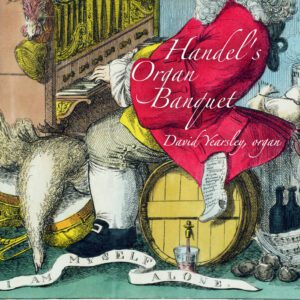
Since Handel wrote relatively little solo organ music, David Yearsley has decided to make amends by brilliantly and stylishly appropriating selections from the composer’s vocal and chamber output for the organ. The result is Handel’s Organ Banquet, a well-balanced and varied program that not only showcases the colorful Cornell Baroque Organ but also Yearsley’s brilliant musicianship.
He commences with the Sinfony from Messiah that sneaks right into the Fugue from the E Minor Suite, as if both pieces were meant for one another. Yearsley’s transparent registrations create a genuine orchestra/vocalist atmosphere in “As with rosy steps, the morn” from Theodora, which is followed by a vibrantly shaped G Major Passacaille. Even the massive tutti stops in the Chandos Anthem No. 9’s opening chorus doesn’t sound thick or clotted. Yearsley’s ambidextrous articulation in the F Major Trio Sonata gives the impression of different musicians operating each of the organ’s keyboard manuals and the pedal board. At first the concluding Menuet seemed too brisk, yet the buoyant trills eventually won me over.
Yearsley almost sounds like two organists at play throughout the Concerto Op. 4 No. 1 in how he imparts distinct characters to the tutti and solo passages; you won’t miss the orchestra at all! Messiah’s closing “Amen” Fugue sounds perfectly natural on the organ (at least in how Yearsley plays it), and makes for a fitting closing to an inspired recital. But wait, there’s more. For a bonus track “encore,” Yearsley spins out a delightful improvisation based on Messiah’s “Hallelujah” that Handel surely would have approved. Yearsley’s reputation as a sharp-witted wordsmith is fully substantiated by his wonderful booklet notes. In short, this organ banquet is a veritable feast!