Blog

  • CD From Hell: Tzimon Barto’s Schubert Impromtus

    There’s nothing remotely “Impromptu” about Tzimon Barto’s Schubert Impromptus, where nearly every phrase is vulgarly over-articulated, over-stressed, dynamically exaggerated, and underlined in multi-colored ink, as if the composer couldn’t speak for himself. Inner voices pop up like disembodied fun-house faces, accompaniments sometimes stick out for their own sake, and forget about consistent pulse and rhythmic flow. Actually, there are two exceptions: both the E-flat Impromptu and F minor Moment Musical move steadily, although Barto rewrites Schubert’s dynamics. But listen to his boorish clipping of phrase ends throughout the A-flat Impromptu, or notice the dynamic hairpins in the C major Moment Musical that belabor the obvious. A seasickness pill ought to have been included with Barto’s lurching rendition of the famous F minor. The G major sonata offers more of the same swooning and strutting. But wait, I’ve saved the worst for last!

    Have you harbored a perverse desire to hear the sublime G-flat Impromptu stretched to 12 minutes and 14 seconds? In other words, two times as long as most recordings (many of which ignore Schubert’s alla breve indication)? Well then, you’ve come to the right party disc, and I dare you to sit through it without breaking down and begging for mercy. Give Barto credit for having the technique and the tonal resources to execute his warped musical concepts (and I use the word “musical” carelessly!), but don’t dignify them by investing your hard-earned cash with an interpretive swindler. Schubert need not turn over in his grave on account of this two-disc set, now that Barto has rendered him thoroughly “decomposed”. [5/19/2010]

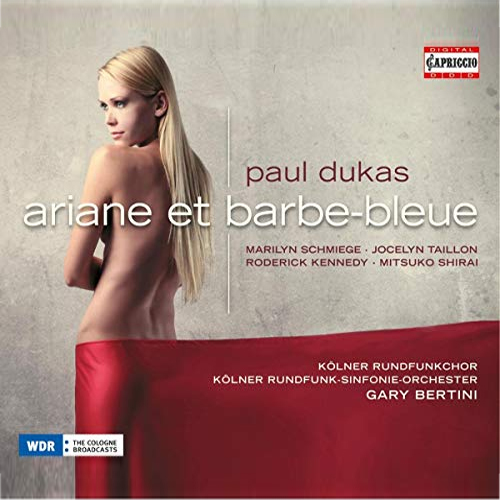
  • Filling In The Gaps: Dukas’ Marvelous Ariane With Gary Bertini

    If you think of Paul Dukas as a Mickey-Mouse composer, […]

    To access this content you must login to your Insider account, or purchase a subscription for $5 monthly, or $49 annually.
  • Shostakovich: Complete Symphonies/Kitajenko SACD

    Kitajenko or Barshai? Or who? That’s really the question as the Shostakovich centennial year of 2006 is well served by two sets of the complete symphonies. To answer the question straight out: Barshai’s Brilliant Classics set, taped in excellent CD sound in the 1990s, edges Kitajenko, despite the latter’s often superior 2001-2004 SACD sound. What Barshai has in particular is his clear understanding of the music’s subversive subtext, exemplified by the harshness and brutality of some of the sounds he makes. Kitajenko’s performances keep the recognition of evil under the surface, concealed by a lyrical, even “classical” approach analogous to the way Kubelik or Bertini seek structural clarity and singing lines in their Mahler sets. In places where Barshai produces raw, shocking sounds, Kitajenko’s tone is more likely to remain musically poised.

    Kitajenko’s lyricism pays dividends in Shostakovich’s numerous slow, lonely passages, which sing to heartbreaking effect, most notably in the Sixth, Eighth, Tenth, Eleventh, and the final movement of the Fourth. And guess what? Even though Kitajenko refrains from telegraphing the message, the underlying meaning sneaks out, albeit undercover rather than in your face.

    It’s the rule that large-scale boxed-set surveys of this sort always have high and low points. In the present case, in which nearly every performance is very respectable and sound tends to be excellent, Barshai has fewer lapses than Kitajenko. For some reason, neither contributes a first-rate Fifth. While Kitajenko rules in the Seventh, and his Nos. 6, 10, 11, and 15 match Barshai’s, Kitajenko is too light-hearted in the Ninth, doesn’t unify the First, and is let down by lightweight bass singing (choral and solo) in the Thirteenth and Fourteenth. The outer movements of the Eighth never have been sung so touchingly, but the two demonic fast movements are too tame and the passacaglia is not dark enough. Barshai is better in the front part of the Fourth, Kitajenko in the finale. Kitajenko scores with magisterial control of the complexities of the Second and imbues most of the Twelfth with tremendous energy, then deliberately lets it dissipate into banality at the end. As for the Third, both Kitajenko and Barshai confirm that piece of trash as a lost cause.

    West German Radio engineers produced stupendous sound in the nine symphonies that were taped in the studio. However, Nos. 1, 4, 7, 8, 11, and 15 were “taped live” in concert, and only Nos. 7 and 15 match that clean, solid, natural sound. The other four get “splashy” when Shostakovich’s extremely loud scoring overwhelms the Köln Philharmonie. Except for those four, the symphonies here sound better than I’ve ever heard. Orchestral playing is outstanding, featuring particularly powerful, solid brass.

    As for contender boxed sets or projects, enough of Gergiev’s recordings (Philips SACDs) are harsh-sounding and unsubtle that it seems the finished product will not challenge this one; Rostropovich (Teldec) fails to convince often enough; and Slovak (Naxos) has an orchestra that sounds minor league. (MDG also has an ongoing project conducted by Roman Kofman, but colleague David Hurwitz succeeded in warning me off of that one.)

  • Poschner’s Superb Bruckner Fifth (Video Review)

    The Bottom Line: This is one of the best entries in Poschner’s ultra-complete Bruckner symphony cycle–a performance full of characterful ideas, perfectly executed.

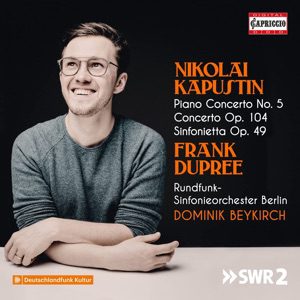
  • Kapustin’s 5th Piano Concerto Rocks (or Swings) on Capriccio

    This splendid new release confirms the excellent impression made by its predecessors, especially the remarkable disc containing the Fourth Piano Concerto and other orchestral works. Kapustin’s jazz-inflected style offers a full range of expressive nuance projected in a consistently kinetic, refreshing and melodically attractive language that is uniquely his own. The Fifth Piano Concerto is a single-movement work about twenty minutes long, and there’s not a dull moment, particularly in Frank Dupree’s nimble and virtuosic performance. Whiplash interchanges between the solo and orchestra ensure endless textural variety, while the musical ideas tumble over one another with uninhibited abandon. It’s as lovable as it is sophisticated, with the Berlin Radio Symphony Orchestra under Dominik Beykirch having a great time as a full participant in the proceedings.

    The Concerto for Two Pianos and Percussion will evoke memories of Bartók’s Sonata for the same combination, but otherwise the two works couldn’t be more different in style. The percussion here is basically a drum set, plus a selection of mallet instruments including xylophone, vibraphone and glockenspiel. The piece is a touch more harmonically astringent than the concerto, but no less engaging. Franck Dupree is joined here by equally able Adrian Brendle on second piano, who also participates in this lively version of the delightful Sinfonietta for piano four-hands. This piece also exists as an orchestral original, which we can only hope to hear someday–it’s a tuneful, high-spirited gem. As you might have surmised, the performances leave nothing to be desired, and Capriccio’s sonics are first rate. This series only goes from strength to strength. You will surely want to hear it.

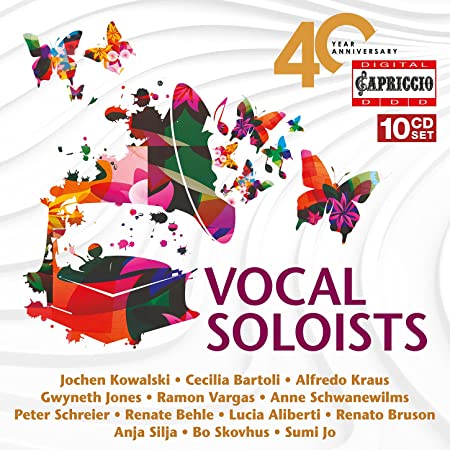
  • 30-Year Cavalcade Of Fine European Opera Stars

    Recorded between 1984 and 2013, these 10 CDs represent the opera singers who appeared on the Capriccio label–some famous, some borderline, a few already forgotten, and some at the start of their international careers. It’s quite a potpourri, with Cecilia Bartoli’s first recordings (“Non so piu;” “Tanti Affetti”, and–wait for it–the mezzo part in the “Meistersinger” quintet); whole CDs devoted to Jochen Kowalski (Handel and Mozart), Hermann Prey (German operetta), Ramon Vargas (Verdi songs), Peter Schreier (Bach, Dowland, Schubert, etc.), Anne Schwanewilms (Wagner), and Alfredo Kraus (songs by Liszt, Verdi, Respighi, etc.); a “Rising Stars” gala from Berlin in 1988; a Richard Strauss gala; 20th century Opera Rarities; and a collection called “L’arte del Belcanto”.

    Hearing Jochen Kowalski again after so many years (I heard this CD when it came out in ‘87), I’m pleasantly surprised. I recalled his countertenor as being a good alto, but somewhat opaque, and hardly on a level of his contemporary, David Daniels, whose sound was grander all around, whose coloratura was faster, and whose delivery had more oomph. It’s still true, but Kowalski has fine style and grace–and he can bring down a rafter or two, say, in “Or la tromba” from Rinaldo and in an aria from Mozart’s Mitridate. And his “Ombra mai fu” is as gentle a poem to nature as you’d ever want to hear.

    Peter Schreier was known for his musicianship, superb exclamation, and purity of delivery. Here, accompanied by lute or guitar (Konrad Ragossnig), we hear an entire program, auf Deutsche, including, bizarrely, five songs by John Dowland, whose “Awake Sweet Love” and “Come away” are distorted by the language. The popular Schubert songs are well handled and the Schütz is pious and a bit dreary.
    Alfredo Kraus’ recital of Italian songs (see above) does not showcase the tenor’s magnificent top, nor his French or bel canto technique, but recorded when he was 60, it is a master class in voice preservation, technique, and his particular charm.

    Ramon Vargas is a wonderful lyric tenor, now singing more Rodolfos than Nemorinos. The booklet offered with these CDs promises favorite tenor arias; sadly the CD contains some tame, if always entertaining Verdi songs. Soprano Anne Schwanewilms gets a CD to herself as well. She’s a fine singer with an attractive voice who sings probably more Wagner than she should, and this CD is proof. “Dich teure halle” is impressive but the Wesendonck Lieder are under-interpreted and Schwanewilms’ voice and approach are too light. Isolde’s Liebestod is beautifully sung and goes by in a flash–the conductor (Cornelius Meister) keeps the volume down for her throughout. Hermann Prey sings little or unknown operetta excerpts by Walter and Wili Kollo, Robert Radeck, Franz Meissner, Fredy Sieg, Paul Lincke, and others of that ilk. If this is your cup of tea, Prey serves it well.

    A Richard Strauss Gala is always a joy to contemplate: which goodie-chunks will we get? Well, this is the right collection, but the singing often sounds under-rehearsed or wayward. Arabella gives us the two Arabella/Mandryka duets and the Act 1 Zdenka/Arabella duet. It features a good if uninvolved Pamela Coburn with a truly mediocre Zdenka sung by Renata Klepper. Bo Skovhus is a brilliant Mandryka. Michele Crider is a boring Ariadne; she’s better as Capriccio’s Madeleine. Klepper remains mediocre as Sophie, Coburn is a good Marschallin, Martina Borst impresses as Octavian, and Franz Hawlata is a wonderful Ochs in his big Act 2 scene.

    The Berlin Opera Gala 1988, as mentioned, features a bit of Bartoli’s earliest and lightest work, more soprano than mezzo but wonderful. Sumi Jo sings a pointy, accurate Der Hölle Rache and has pitch issues in “O luce di quest’ anima”. Ensembles from Lucia, Rigoletto, and Don Carlo do little for the reputation of the otherwise little-known Daniela Lojarro, quite properly lost to time, but show tenor Giuseppe Sabbatini to be artful and accurate (and he sings a quite stunning “Salut demeure”, complete with a diminuendo on high C). Gisella Pisani is a good “house mezzo”, Michele Pertusi is a really fine bass in “Non piu andrai”, and as Philip II and Raimondo.

    A CD called “L’arte del bel canto” does the world–and I mean this–a favor by featuring several arias sung by Renato Bruson, the soul of smooth singing, with a beautiful voice. Most welcome are excerpts from Donizetti’s Gemma di Vergy and Caterina Cornaro–gorgeous cavatinas from each–and big boned singing from La favorita and Dom Sebastiano. As penance for Bruson, we have much to hear from Lucia Aliberti, a Callas wannabe with a cruddy technique, no trill, and pitch problems. Sabbatini again impresses.

    The final CD covers 20th-century “rarities” and would be valuable if for no other reason, but also contains excellent performances: three operas by Zemlinsky, two by Schreker, one by Franz Schmidt, four by Weill, and one each by Krenek and Manfred Gurlitt (Wozzeck from 1925–who knew?). Suddenly, Capriccio’s lack of notes or translation becomes an issue here, since nobody I know has the libretto for Weill’s Der Kuhhandel, Krenek’s Schwergewicht ohde Die Ehre der Nation, or even Zemlinsky’s Der Traumgörge, all three of which (and others) are represented by excerpts that make us want to hear more.

    Regardless of your need for this type of 10-CD Cavalcade, this set is a true bargain and covers enough music and stars (some of whose careers were mostly in Europe) to be valuable, especially at such a bargain price.

  • Poschner’s Stupendous Bruckner 8th (video review)

    Yes, Bruckner can be refreshing. Witness this lively, flowing performance that never sacrifices the necessary gravitas for mere speed, but which delivers an interpretation of unusual cogency and musical logic. This is without a doubt one of the finest versions of this epic symphony available, a performance totally and miraculously without any “dead” spots. Kudos to Markus Poschner the Bruckner Orchestra of Linz, and Capriccio Records for yet another outstanding volume of this ongoing series.


  • Dohnányi’s Disappointingly Dismal Veil of Pierrette

    Fans of this still-neglected composer familiar only with the waltz-sequence from this eighty-minute ballet are likely to be disappointed by the full work, not that the music doesn’t suit Arthur Schnitzler’s miserable plot perfectly. The story is a dark gloss on the usual Commedia dell’Arte trope involving a love triangle between Pierrot, Pierrette and Arlecchino, only here Pierrot commits suicide by taking poison, Pierrette is supposed to join him but changes her mind (they are in love but she’s just married Arlecchino for some reason), and Arlecchino sadistically locks her in the room with hear dead would-be lover until she dances herself to death. Trust me, the music is as dismal as Arthur Schnitzler’s story, mostly subdued, monochromatic, and melodically wanting.

    Ariane Matiakh and the ORF Vienna Radio Symphony do what they can with this unappetizing material. Now I’m as big a proponent of fin-de-siècle decadent doom and gloom as anyone, but the whole point of it is that the music should be so seductive and gorgeous that you wind up loving it anyway. Dohnányi’s mistake is in taking Schnitzler at his word. Perhaps he was overawed to be working with the famous author, but for whatever reason the result is merely desultory, and more importantly, really a dull slog. I can’t think of any moments when Matiakh and crew could have done more to liven things up when Dohnányi’s music gives them no opportunity. A disappointing release, then, and a lot of work done for little reward.

  • THE KOLA–KEEP ON LISTENING AWARDS–ARE IN! FEATURING THE 10 BEST RECORDINGS OF 2021

    The ten best recordings of 2021 represent an eclectic mix of new recordings and boxed set reissues. Regarding the former, the emphasis for the most part is on interesting or unusual repertoire–the kind of thing you’ll seldom if ever hear in concert, unfortunately–and regarding the latter, I wanted to stress reissues of recordings by important artists that have long been unavailable. Happily, there was no shortage of either, making this selection a true embarrassment of riches for the adventurous, or even the merely curious, classical music lover. Check out the video and list of winners below, and Keep On Listening! –Dave Hurwitz

    Mahler: Das Klagende Lied (Gielen/Orfeo)

    Chopin: Nocturnes (Hough/Hyperion)

    Arnold: Symphonies and Dances (Penny/Naxos)

    Bartók: Music for Strings, Percussion and Celesta, Concerto for Orchestra (Mälkki/BIS)

    Martinu: Frescoes, Parables, Estampes (Netopil/Supraphon)

    Byrd and Bull: Keyboard Works (Armstrong/DG)

    Igor Markevitch: Complete Philips (Decca) Recordings (Decca Eloquence)

    Eugene Ormandy & The Philadelphia Orchestra: The Columbia Legacy (Mono Recordings/Sony Classical)

    Orpheus Chamber Orchestra: Complete Deutsche Grammophon Recordings (DG)

    Disc of the Year:

    Kapustin: Piano Concerto No. 4, Double Concerto, Chamber Symphony (Dupree/Capriccio)

  • London Nights With Franziska Lee

    Franziska Lee’s first Capriccio solo CD presented an intelligently curated and capably executed recital of works by 20th century French composers. Her followup release lavishes similar treatment upon five British composers.

    The craggy neo-classicism of Tippett’s First sonata makes for a good concert opener, especially in Lee’s highly articulated, rhythmically incisive reading. Her piercing detaché passagework in the third-movement Presto, for instance, differs from Paul Crossley’s faster, more generalized Decca and CRD recordings, although Murray Perahia’s finale keeps the foreground and background material in better perspective. Lee’s similarly harder-hitting approach to the Funfair movement from Britten’s Holiday Suite differs from Stephen Hough’s altogether suaver interpretation.

    Listeners familiar with Frank Bridge’s Three Sketches may appreciate Lee’s literalism and attention to inner voices, while preferring Mark Bebbington’s songful flexibility. Capriccio’s relatively close engineering underlines the linear emphasis in Lee’s performance of Ireland’s Ballade of London Nights. Yet again, Bebbington’s more luminously engineered and slower traversal proves a more seductive option.

    While Lee certainly gets around the thick textures and swirling passages in Bax’s early, sprawling single-movement Sonata No. 1, her frequently square phrasing and insufficient coloristic resources yield to more emotionally varied and fluent catalog options from Eric Parkin and Michael Endres. I’m not certain if the late British pianist Iris Loveridge’s 1959 Lyrita recording was the work’s first, but its combination of nobility and excitement remains unsurpassed, despite the aging sonics. Capriccio’s annotations say nothing about the works nor Franziska Lee’s programming concept.