Blog

  • Dausgaard’s Uninteresting Brahms Second

    This latest installment in Thomas Dausgaard’s ongoing effort to downsize the romantic symphonic repertoire isn’t as bad as some of his previous releases, but it’s nothing special either. The performances are easily described, and just as easily dismissed. In the Second Symphony, Dausgaard takes the first movement unusually quickly, the slow movement more or less normally, creates insufficient contrast between the third movement’s two tempo areas, and presides over an erratically paced finale featuring a hectic coda in which speed doesn’t compensate for the lack of weight and emphasis.

    Here and elsewhere, the smaller forces of the Swedish Chamber Orchestra mean that at pianissimo dynamic levels the thread of the musical argument disappears nearly entirely, along with its natural expressivity. Consider the melody at the opening of the second movement and the first movement’s second subject as telling examples. And why is it that the use of smaller forces means that tempos need to be quick, whether the music demands it or not? Is it a Pavlovian response? It’s a mannerism as predictable is it is boring.

    The performance of the Haydn Variations is technically correct but so faceless that as soon as it’s over you will forget that you just listened to it. Dausgaard’s fleet and shallow account of the Academic Festival Overture denies it any of the grandeur or good-natured pomposity that Brahms wrote into it. Finally, Dausgaard’s orchestrations of Hungarian Dances Nos. 5-7 are both unstylish and amateurish, with random changes of often garish tone color every few bars. It couldn’t sound less like Brahms. The playing is excellent, the engineering superb, but it’s all in a lost cause.
  • Sudbin Plays It Smart in Rachmaninov 2 and 3

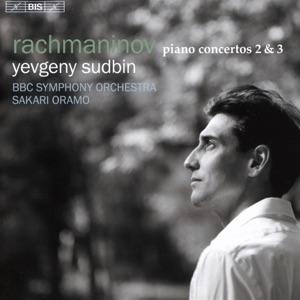
    There are elegant, intelligent performances from a soloist who’s clearly thought about the music and knows how to get what he wants out of it. In the Second Concerto, Sudbin throws down the gauntlet right at the start with an unusually swift and (as it turns out) in-tempo account of the introductory chords. Unlike so many hot shot virtuosi, he doesn’t try to overwhelm the orchestra when it enters with the first subject–he understands that in this work he accompanies the ensemble as much as the other way around. So the solo emerges naturally from the instrumental texture, and from there on the music moves forward fluently, effortlessly, lyrically in the slow movement, and with plenty of panache in the finale. It’s really one of the better accounts of this piece in many years, assisted in no small degree by Oramo’s alert conducting and BIS’s typically realistic, well-balanced engineering.

    The Third Concerto is almost as good, but not quite. Sudbin plays the first movement relatively swiftly and gracefully, with scrupulous attention to dynamics. His choice of the larger, clunkier cadenza might seem odd in this context, but given his slightly understated approach to the rest of the movement the opportunity for some fireworks works rather well. In the Intermezzo, you won’t hear a more cogent handling of its tricky tempo relationships anywhere. As in the Second Concerto, fluency is the name of the game, and not a bar hangs fire. It’s only in the Finale that you wish Sudbin had thrown caution to the breeze and let go just a little bit more. While I appreciate his desire to impose some shape and phrasing on the first subject’s thickets of notes, never mind his ability to really do it, the movement could move a bit more quickly, or at least more freely.

    Still, the interpretation is consistently of a piece, smart and very musical, and alongside the magnificent Second Concerto the disc earns a confident recommendation. I suspect it will wear well over time.

  • Rimsky-Korsakov: Sensational Russian Easter from Bakels

    Wow! Move over Stokowski! Kees Bakels and his Malaysian players go nuts in the last two minutes of the Russian Easter Overture, cutting the tempo in half just before the big peroration, then taking off like a shot with thrilling percussion and excitingly amended timpani parts. It’s a blast, and how nice to hear a modern conductor willing to make free with the literal text in this music and simply have some fun going for broke. The remaining items in this collection, if not quite so deliciously eccentric, benefit from excellent playing and from Bakels’ willingness to maximize the color and excitement of music that consists of little else.

    In the Capriccio espagnol, the first-desk players acquit themselves proudly in the Variations, while Bakels drives the music as hard as it will go in the concluding Fandango, closing with a tremendous rush of adrenalin. The Tsar Saltan Suite includes as its third part The Flight of the Bumblebee, where it makes an apt interlude between the standard three movements. Both this work and Sadko sound as lively and enchanting as they ever have. That leaves Noriko Ogawa’s bright and perky take on the rarely heard Piano Concerto, a delightful piece that never gets played these days as it lasts a mere 14 minutes and doesn’t fit into any sort of normal concert program.

    Sonically these performances remain in a class of their own. The brilliance and realism are simply breathtaking, with a full dynamic range, ideal depth and breadth of soundstage, firm bass, open highs, and a panoramic splendor unrivaled on disc. I would dearly love to hear what these players could make of, say, Tchaikovsky’s Manfred Symphony, but there’s also plenty more Rimsky-Korsakov (but not the symphonies, please) in the form of the remaining opera suites and overtures. In the meantime I will enjoy this often, and believe me, you will too. [10/5/2004]

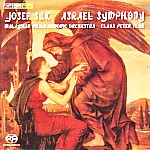
  • Suk’s Asrael Symphony Smokes Under Flor

    This is one smoking hot performance of Suk’s masterpiece, and I wouldn’t have expected it coming from Claus Peter Flor, a fine musician but one who’s seldom associated with this sort of volatility. Then again, when you’ve made a recording career primarily devoted to Mendelssohn, a composer whose qualities never would be summed up by the words “smoking hot”, perhaps it’s not too surprising that some of your interpretive strengths have yet to be exposed. I’m thinking in particular of the climax at the end of the Asrael Symphony’s first movement, with thudding bass drum and screaming violins, all capped by a massive accelerando into the final catastrophe. Fabulous!

    Then there’s the dazed stillness of the second movement, with its constant refrain of the “death” motive from Dvorák’s Requiem, or the ghostly danse macabre that is the central scherzo. Flor handles all of this magnificently, with perfectly judged tempos and incisive accents. Suk said of the finale, “You have no idea what that final C major chord cost me”–and hearing the intensity that Flor brings to the unfolding struggle, you can believe him. The Malaysian Philharmonic plays like a pack of demons, and the sonics, as usual from this source, are world-class. What a great piece, and what a great performance!

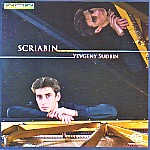
  • Scriabin: Piano sonatas, etc./Sudbin SACD

    This is on balance the most well-chosen, brilliantly played single-disc selection of Scriabin’s piano music currently available. The repertoire offers three of the composer’s best sonatas and includes works ranging from the beginning of his career (the Étude Op. 2 and the charming Four Marzurkas from Op. 3) right through to his most mature, radical phase (the “Black Mass” Sonata No. 9). Pianist Yevgeny Sudbin intersperses the shorter works between the three sonatas, beginning with the scintillating Étude Op. 8 No. 12, and concluding with a particularly lilting, luscious reading of the Valse Op. 38. There’s a lot of music and a vast range of expression packed into this disc’s 57 minutes, making for a spectacular concert that encourages you to listen straight through at one sitting.

    The performances of all three sonatas are remarkable for their rhythmic definition (no chromatic sludge here) and for the remarkable sense of languorous flow that Sudbin achieves through minutely calculated dynamic shadings. In the dreamy first movement of the Second sonata you can really hear the difference between piano and pianissimo, and the diminuendos on the motto theme’s closing triplets are beautifully judged. The Fifth sonata’s presto 6/8 sections project very powerfully, sort of like Ravel on speed, and when Scriabin asks for “luminosita” at the climax, that’s exactly what Sudbin provides, with no trace of brittleness in his instrument’s treble register.

    The “Black Mass” sonata can either be great fun (in the way that a horror movie is fun), or an ungodly mess. Sudbin has fun. Who knows exactly what Scriabin had in mind when he wrote expressive directions like “with increasingly poisoned sweetness” over the sonata’s more voluptuous passages? Sudbin plays them to the hilt, arriving at the Alla Marcia climax with tremendous power and perfect timing. He’s a bit quicker in this sonata than Horowitz, but whatever loss in atmosphere this might have entailed is more than compensated for by Sudbin’s huge dynamic range and subtleties of touch.

    Among the shorter items not previously mentioned, the Poème from Op. 59 stands out as a highly polished little gem. Sudbin contributes his own very entertaining booklet notes which, like the music itself, go over the top now and then, and BIS’s SACD surround sonics are incredibly lifelike, equally so in regular stereo. Even if you don’t normally warm to Scriabin’s hyper-romantic idiom, I guarantee that you will find this recital thrilling. [10/1/2007]

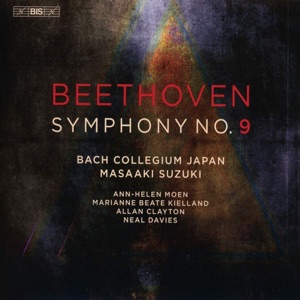
  • Suzuki Sucks In Beethoven’s Ninth

    Remember Sugar Plums? That was the Hoffnung Festival performance by the Dolmetsch Ensemble of Tchaikovsky’s greatest hits (including the 1812 Overture) on baroque instruments. It was ridiculous and hilarious, intentionally so. This Beethoven Ninth is ridiculous and probably more obnoxious than hilarious, because its ridiculousness is unintentional and certainly no joke. Honestly, I have no patience for this foolishness anymore. If you want to hear this piece played by a vibratoless, period-instrument string section numbering 8,8,6,5,3, knock yourself out. It sounds horrible.

    As for the interpretation, Suzuki has few ideas, most of them bad. The first movement is relatively swift, not unduly so, and some might find the climaxes interesting with the strings overbalanced by the winds, brass, and timpani. The scherzo, with lots and lots of repeats, moves too quickly in its outer sections to secure rhythmic clarity, and Suzuki takes the trio at the absurdly fast tempo possibly inspired by Beethoven’s likely erroneous metronome marking. At that speed the solo horn’s intonation becomes especially atrocious.

    To his credit the Adagio isn’t insanely quick–it’s actually almost exactly the same tempo as Klemperer’s, believe it or not, so Suzuki isn’t consistent about the metronome business. The only problem is that at the slower speed the baroque strings sound even thinner and more anemic than they would otherwise. The finale goes by quickly, which comes as a relief, with the teeny tiny choir (31 strong) sounding audibly stressed in the big central fugue and woefully undernourished elsewhere. This symphony is nicknamed the “Choral”, not the “Madrigal”. You get the picture. Avoid this like death.

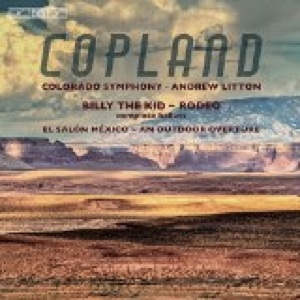
  • Litton Delivers Highly Polished Copland

    This is “meat and potatoes” repertoire for a conductor like Andrew Litton, and he doesn’t disappoint. He has the Colorado Symphony playing at the top of its form. The Outdoor Overture has both swagger and brilliance, and it never sounds as though it was composed for a youth orchestra (which it actually was). Of course Copland deserves some of the credit for that too, but this doesn’t diminish the care and affection that Litton lavishes on the music.

    Next up: Billy the Kid in its very welcome complete version, another virtuoso performance recorded with powerful impact. The gunfight is tremendous, and the whole piece builds inexorably to its concluding apotheosis. El Salón México is much harder to play than it sounds–it’s basically written in a quick 8/8 that Copland groups within the bar as suits his fancy. Orchestras underestimate its difficulties at their peril. This performance makes the piece sound easy–perhaps too easy, as in the rather self-indulgent handling of the big string tune before the main allegro kicks in. Still, once the music gets hopping it moves along smashingly.

    Rodeo, also in its complete version, features very frisky versions of Buckaroo Holiday and the concluding Hoe-Down. It doesn’t, to be frank, sound all that danceable and I can’t help but think that the piece would benefit from a bit more edge and weight of sonority at a more deliberate speed, but God knows that the orchestra pegs the rhythms and hits those off-beat accents. Ultimately it’s a matter of taste, and certainly these polished performances, so well engineered, offer little cause for complaint. I would very much like to hear these forces take on the symphonies (Litton already recorded the Organ Symphony in Dallas for Delos, you may recall, and quite well too). Recommended.

  • Weber: Clarinet Concertos SACD

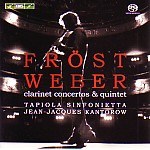
    This is an absolutely wonderful disc in every way. Weber’s clarinet music is delightful, and it’s hard to imagine it being better played or recorded. Martin Fröst has such a supple, liquid timbre that at times you could almost swear there were words behind the notes, especially in the slow movements of all four works. And few soloists manage to bring such an irrepressible feeling of joy to the virtuoso passages that you can hear, say, in the finale of the Second concerto.

    Kantorow and the Tapiola Sinfonietta also offer perfect accompaniments: swift, sensitive, texturally transparent, and rhythmically snappy. The F minor concerto in particular has plenty of passion and drama. The conductor’s own transcription of the Clarinet Quintet for string orchestra works beautifully and fills out the disc generously, while the engineering in all formats couldn’t be better balanced or fall more easily on the ear. There’s no need to go on at length: this is now the reference recording for this music. It defines “state of the art.”

  • Weber: Overtures/Kantorow SACD

    The playing here is generally excellent, but in the Freischütz Overture you miss the heavy-duty atmosphere of German romanticism: the opening is evocative but the allegro needs more sheer weight, particularly in the strings (those tremolos under echoing horns and clarinet). That said, the very same lightness benefits the fairyland textures of Oberon, while Jean-Jacques Kantorow’s rhythmic zest captures the Spanish flavor of Preciosa very effectively. And there’s no questioning the gusto or the brilliant orchestral effects so impressively captured in Turandot and Abu Hassan. Let’s face it: 67 vibrant minutes of some of the most splendid music ever composed for the theater, naturally recorded, is hard to resist. Give it a shot.

  • Still More Excellent Saint-Saëns Piano Concertos

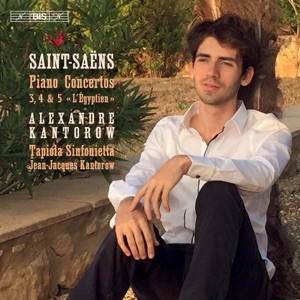
    We seem to be undergoing a Saint-Saëns piano concerto bonanza, and this excellent disc could well take pride of place had it not been for Louis Lortie’s Chandos recordings, which are just that much finer still. The outstanding performances here are the Fourth and Fifth Concertos, the former cogently shaped and urgently projected, especially in the work’s latter stages. Alexandre Kantorow respects the music’s basic sobriety but still endows the outbursts of virtuosity with appropriate élan and sparkle. I can’t think of many performances of the second movement that make the music sound more purposeful.

    In the “Egyptian,” Kantorow’s intelligent handling of the exotic arabesques in the second movement is both beautiful and tasteful, but in this same movement the Tapiola Sinfonietta under the elder Kantorow can’t compare in rhythmic bite and weight of sonority with the BBC Philharmonic under Edward Gardner for Lortie. Still, this account of the dashing finale has plenty of fire, if not quite Lortie’s daredevil excitement.

    The Third Concerto, for some reason, lacks a bit of atmosphere at the opening–perhaps Kantorow is just a bit too reticent, even though he’s accompanying the orchestra–and the main theme of the finale is oddly accented, but otherwise there’s little to complain about. Gorgeous engineering makes this a disc well worth considering if you collect these works (and you should).